Skip Navigation

International Quilt Study Center

New Home Open!

Newsletter

The new world-class International Quilt Study Center & Museum opened, March 30, 2008 on the East Campus of the University of Nebraska-Lincoln.

The glass and brick building, designed by the internationally renowned Robert A.M. Stern Architects of New York, houses the world's largest collection of more than 2,300 quilts and an international study center dedicated to the research, preservation, and display of important quilts from cultures around the world. The $12 million facility was privately funded through contributions to the University of Nebraska Foundation, including a lead gift from the Robert and Ardis James Foundation of Chappaqua, N.Y.

In addition to the Ardis and Robert James Collection of antique and contemporary studio quilts, the collection also includes the Cargo Collection of African American Quilts, and the Jonathan Holstein Collection, which includes the seminal Whitney Collection and an unparalleled group of Pennsylvania Amish quilts.

The facility is on East Campus of the University of Nebraska-Lincoln at the northwest corner of North 33rd and Holdrege Streets. The Center is an academic program of the Department of Textiles, Clothing and Design in the College of Education and Human Sciences.

The environmentally responsible building on track for Silver-level certification in the U.S. Green Building Council's Leadership in Energy and Environmental Design program, the nation's benchmark for high performance green buildings. Alley Poyner Macchietto Architecture of Omaha is architect of record.

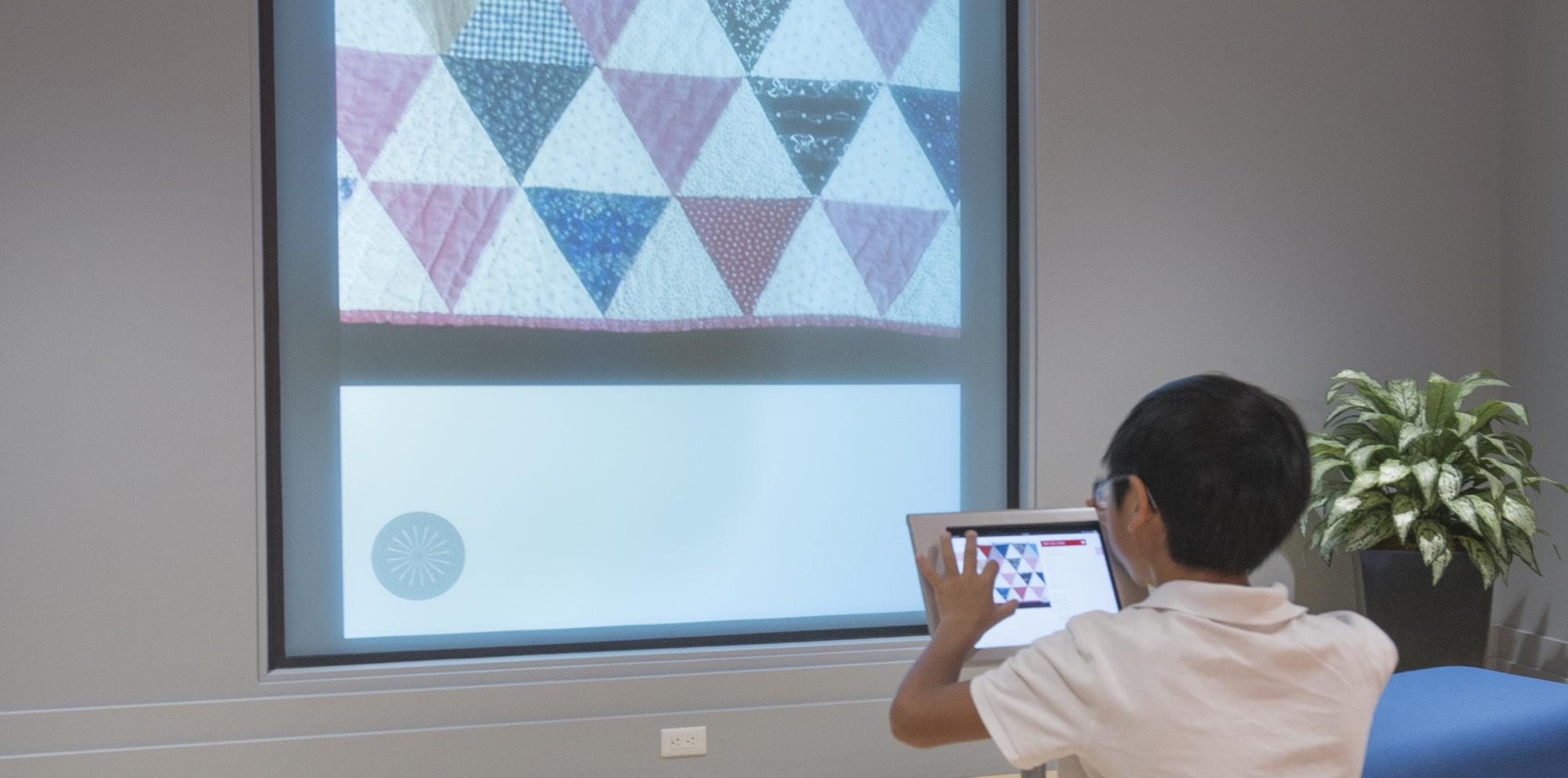
A Virtual Quilt Gallery is available at the museum and will be added this summer to on-line resources at www.quiltstudy.org. It provides multimedia, interactive experiences for visitors of all ages. Individuals may design a quilt; inspect details of quilts from over a thousand archived images, and record quilt stories on topics including family memories, artistic inspiration, quilt history, or reflections on their visit to the museum. These Web-based services will allow visitors to share their experiences with other via e-mail.

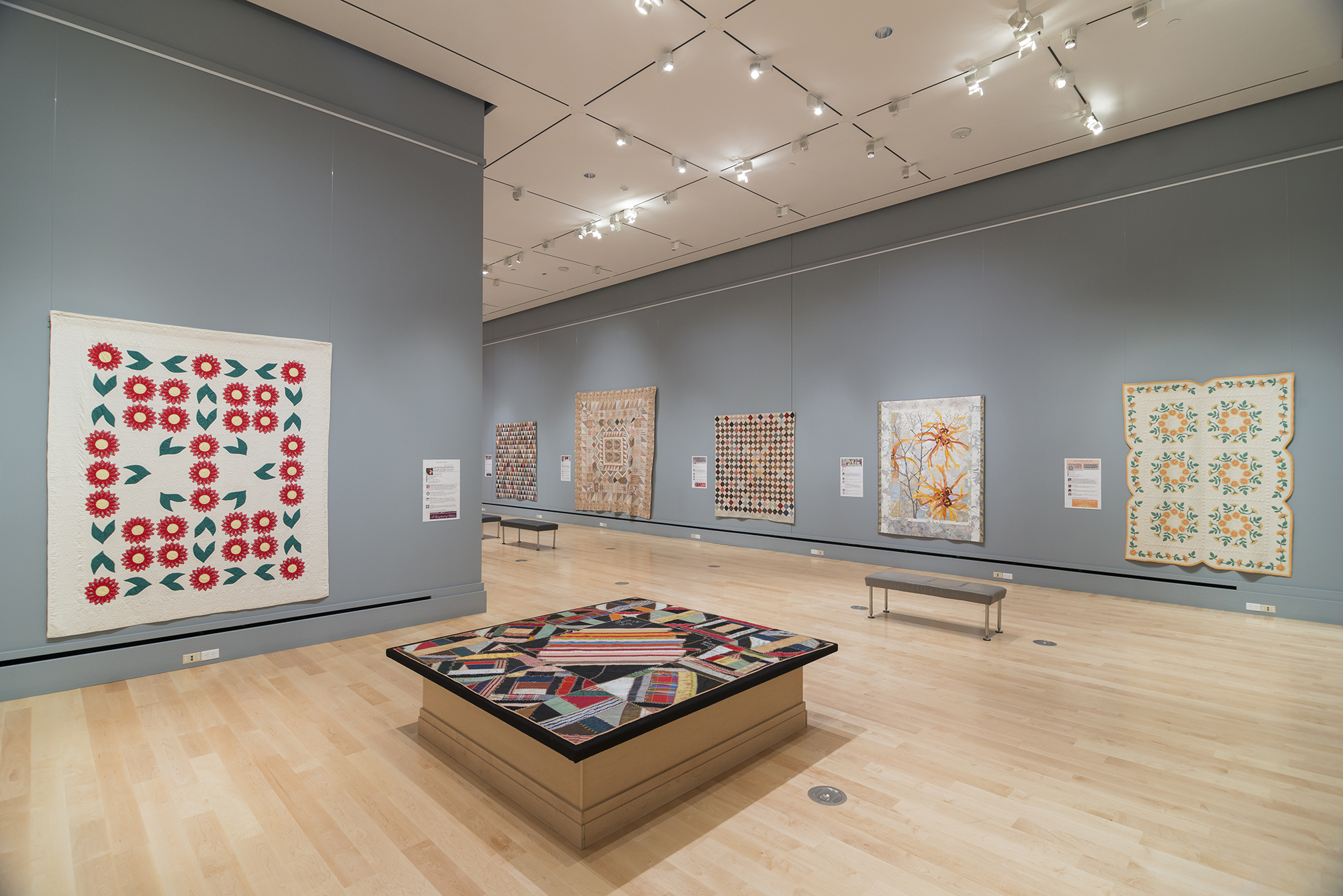
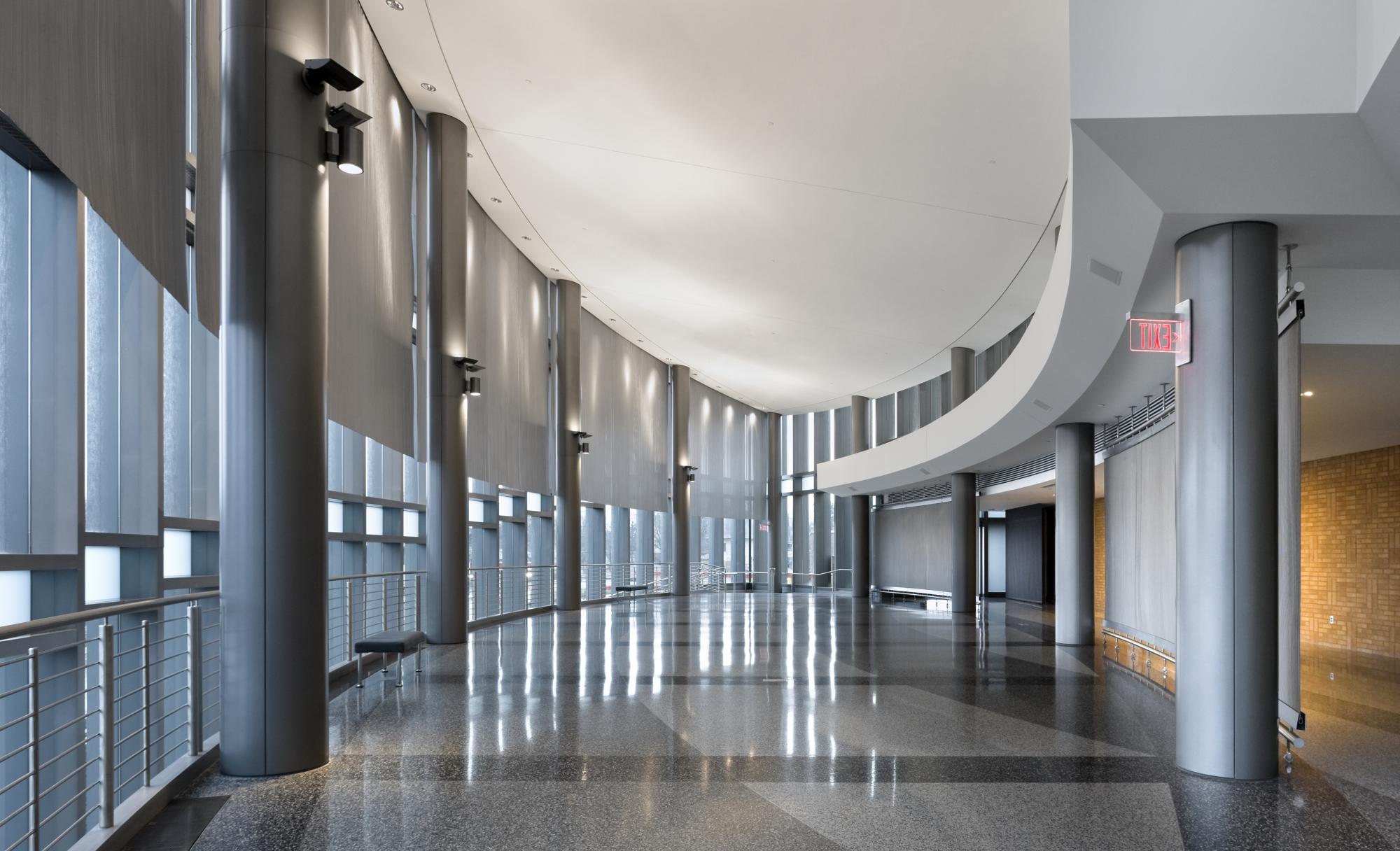
The three-story, 37,000 square foot museum features a bowed facade of glass panels "stitched together" to create a large-scale pattern. It contains public galleries (displaying 40-60 quilts at a time, shown in curated exhibitions which change several times each year), classroom and meeting spaces, a museum shop, a conservation and research laboratory, and a climate-controlled storage area for the Center's expanding collection.

The International Quilt Study Center was founded in 1997 when native Nebraskans Ardis and Robert James donated their collection of nearly 950 quilts to the University. It has since become the largest public collection of its kind.

A graduate program in textile history with an emphasis in quilt studies has been created; it is the only program of its kind in the world. "Our program is unique," said Crews. "We encourage important quilt scholarship and nurture the appreciation of quilts as an art form while helping to reveal their cultural history. Our interdisciplinary program encourages the study and appreciation of quilts both as aesthetic objects and as cultural artifacts, celebrating their beauty and importance to social and economic history."

Before moving into its new home, the Center was located in the Home Economics Building on the East Campus. Limited space was converted for the collection in 1997, but no gallery or dedicated work areas were available at that time. The Center's new home enables it to carry out its mission of collecting, preserving, studying, exhibiting, and promoting discovery of quilts and quiltmaking traditions from many cultures, countries, and time periods. For more information about the International Quilt Study Center & Museum, visit www.quiltstudy.org


Australian Quilt Presented to Museum

At the March 2007 meeting of the International Quilt Study Center & Museum International Advisory Board board member and noted textile historian Annette Gero presented a donation of an Australian wagga. She provided extensive documentation, including a photo of the maker and the original recipient of the quilt. This is a significant gift to the IQSC, as it is the center's first Australian quilt.

Quoting Annette from her book Historic Australian Quilts, "Waggas were Australian quilts of the late nineteenth and early to mid twentieth century. They were utilitarian, often extremely crude and used mainly in the country as bed quilts or verandah quilts, and by drover and swagmen. No country property was without its quota of waggas.

The origin of the wagga is not known, but quilts or comforters such as the Pennsylvanian hap in America or the North Country English quilts are known to have similar methods of construction. The wagga consisted of a stuffing, often food or fodder sacks such as Hessian bags, or cur down woolen clothing, covered on both sides with pretty cotton fabric such as cretonne, often in patchwork, and quilted or roughly tied through the layers to hold it together. They appear to have been made in every state in Australia and by both men and women."

The collection of the International Quilt Study Center & Museum currently includes quilts from 24 different countries

Crafting a Better Planet One Quilt at a Time

Two eco-friendly organizations are behind the "Crafting A Better Planet Quilt Competition": Mountain Mist/Leggett & Platt, Inc. and the International Quilt Study Center & Museum at the University of Nebraska-Lincoln. Both organizations, known for their dedication to quilters and quilting traditions, have added environmental responsibility to their priorities.

The International Quilt Study Center & Museum at the University of Nebraska-Lincoln will move into a beautiful new home in early 2008. In addition to the stunning architectural design, much needed new storage and study space, and truly wonderful exhibition galleries, the building will also be GREEN! The new museum, designed by the New York firm of Robert A.M. Stern Architects in partnership with Alley Poyner Macchietto Architects of Omaha, will be the first "sustainable" building designed from start to finish on the UNL campus. This means special efforts and decisions have been made and implemented to meet stringent standards regarding the site, water efficiency, use of materials, energy and other resources, and maintenance of indoor air quality. The environmentally sustainable structure will house the center's world-class collection of nearly 2300 quilts. For more information about the International Quilt Study Center, visit www.quiltstudy.org.

One of the first exhibitions in the center's new museum will feature finalists in the "Crafting A Better Planet Quilt Competition." Quilters who enter the competition are given the opportunity to use their creativity to combine natural components into pieces that tell an environmentally friendly story. Selected quilts from the competition will also become part of a traveling exhibition.

Mountain Mist/Leggett & Platt, Inc. is marketing EcoCraft: the world's first man-made, annual renewable, nature based craft fiber line. EcoCraft introduces the next generation of environmentally kind Eco-Friendly batting, fiberfill and pillow forms. EcoCraft products are made from a revolutionary new process that creates soft, durable fiber from corn. This fiber is called INGEO and is also known as PLA. The use of renewable resources is better for the environment and your family. Fresh from cornfields in America's heartland, EcoCraft allows crafters and quilters to make the responsible choice when choosing the filling for their quilts, teddy bears or decorator pillows.

The "green" message touches every life. Ads on the television, governmental and political messages, and the information children are learning in the classrooms all urge eco-friendly choices. The world is calling for less reliance on fossil fuels while living in a more sustainable manner. Modern consumers demand innovative products that utilize renewable resources in an effort to keep the environment clean. Mountain Mist/Leggett & Platt, Inc. and the International Quilt Study Center & Museum encourage all quilters to join them in thinking, and quilting, "green"!

QUICK FACTS

Hours: Tuesday-Saturday 10:00 a.m. to 4:30 p.m., Sunday 1:00 to 4:30 p.m. Closed Mondays and major holidays.

Tours are available. (For groups, please call 402-472-6549.)
Cost: Adults $5, Age 5-18 $3, under 5 yrs. Free, 2 Adults with children $10

Opening Exhibitions:
"Quilts in Common": Features selections from our permanent collections focusing on the common visual and conceptual elements they share. Unexpected combinations create a fascinating and memorable exhibition featuring many of our masterpieces, certainly not to be missed.

"Nancy Crow: Cloth, Culture, Context": Features Crow works from our collection as well as a grouping hand picked by Nancy and our curators to show her approach to the art of quilting throughout her career.

Our mission is to collect, preserve, study, interpret, and exhibit quilts from all times and all cultures. Our curatorial staff divides their time between these activities so that when exhibitions are installed, visitors are able to see some of the best examples of the various types of quilts and also become informed about aspects of quilts and their reflections of culture.
We will usually hang from six to eight exhibitions each year and each exhibition is comprised of 15-25 quilts, allowing visitors to have an in-depth view of around 100 quilts. We wish we had the staff, space resources, and financial resources to curate and hang more exhibitions from our collections. While most museums do not attempt to make their entire collections available on-line, we are aware of our audience's keen interest in the collections, and through the support of our generous donors, our collections are available for viewing in our Virtual Gallery and on our website.